BISP Re-Survey Last Date for Ineligible Households
Looking for the BISP re-survey last date for ineligible households? Get clear facts on NSER dynamic surveys, deadlines, and step-by-step restoration. If your household was previously marked ineligible or dropped from the Benazir Income Support Programme, you are likely looking for a hard deadline to fix your status. People across Pakistan constantly search for a final countdown date because missing out on the quarterly financial aid feels catastrophic for struggling families. The truth on the ground is more nuanced than a single calendar deadline flashing on a news ticker. BISP handles data updates through an open, rolling mechanism rather than a one-time cutoff, but failing to act after a status change carries heavy risks. Let’s break down how the re-survey system works, how to reverse an ineligible status, and what timelines actually matter for your household.
Also read: Complete Guide to the BISP 8171 Web Portal Status Check
Understanding the BISP Re-Survey and Ineligibility Triggers
Every social welfare system relies on data verification, and Pakistan’s National Socio-Economic Registry (NSER) is the backbone of BISP. When households get flagged as ineligible, it rarely happens by accident. The system runs automated cross-checks using Computerized National Identity Cards (CNICs) against federal databases to track wealth markers, international travel history, vehicle ownership, and utility consumption patterns.
Why Households Lose Their Eligibility Status
- Proxy Means Test (PMT) Score Shifts: If your household score creeps above the threshold cutoff—typically sitting at 32—due to reported asset changes, the system automatically suspends payments.
- Outdated Registry Records: Profiles older than three years face automated flags because family sizes, income streams, and economic hardships change over time.
- External Verification Flags: High mobile phone utility bills, possession of a passport with executive-fee travel history, or government employment records tied to family members frequently trigger immediate disqualification.
The Myth of a Single Hard Deadline
Many applicants panic over rumors of an absolute nationwide closing date for re-surveys. In practice, BISP maintains an ongoing registration and dynamic survey window at its tehsil offices. However, if you received an explicit SMS notification prompting a mandatory dynamic survey update, ignoring it means your file remains frozen, effectively locking you out of upcoming payment disbursements.
Is There a Final Cutoff Date to Submit Your Re-Survey?
When families ask about the last date for the ineligible household re-survey, they want a calendar day they can circle. Officially, BISP does not enforce a rigid expiration date that shuts down registration permanently. Instead, the program operates on continuous intake cycles tied to quarterly financial allocations.
How the Rolling Intake Cycle Affects You
Think of the BISP enrollment framework like a bus schedule rather than a train departure. If you miss one bus, the next one arrives down the line, but waiting means you miss out on immediate travel.
If your re-survey data is processed and your Poverty Score drops back below the required threshold, your file enters the queue for the subsequent disbursement phase. Delaying your visit to the registration center only delays your financial relief by an entire quarter.
Step-by-Step Guide to Overturning an Ineligible Status
Fixing a dropped or rejected status requires moving methodically through official channels. Relying on shortcuts or third-party online forms will only waste precious time and expose you to scams.
Step 1: Verify Your Exact Status via 8171
Before visiting any office, text your 13-digit CNIC number to the official 8171 shortcode. Note down the exact response text. Knowing whether your status reads “under review,” “ineligible,” or requires a “dynamic survey” dictates your next move.
Step 2: Gather Essential Documentation
When you head to the registration desk, missing paperwork will turn you away at the door. Pack these mandatory items:
- Original, unexpired CNIC issued by NADRA (in the female applicant’s name)
- Form-B (Child Registration Certificate) for dependent children to secure educational stipends
- A recent utility bill (electricity or gas) proving your residential address
- Supporting documentation for special circumstances, such as a death certificate for widows or disability papers
Step 3: Visit the Designated BISP Tehsil Office
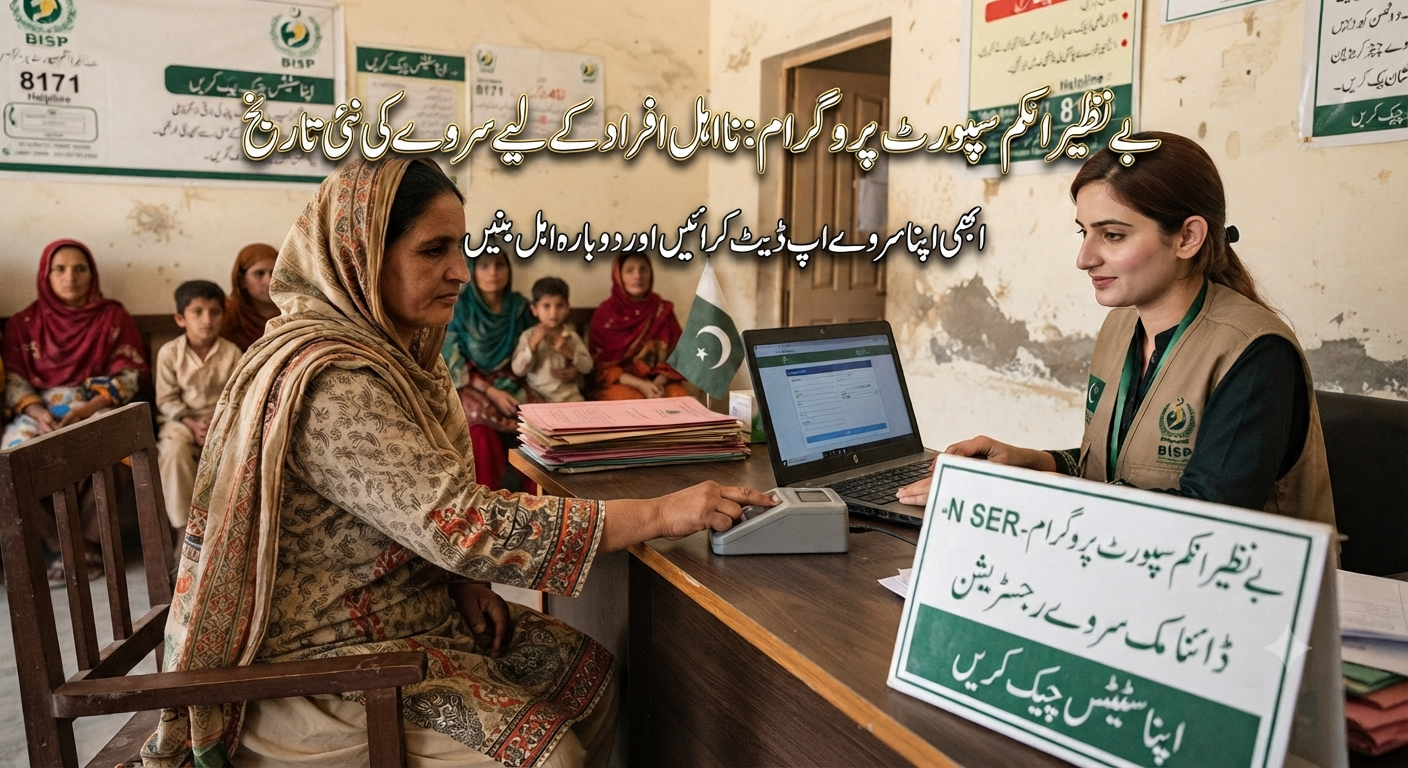
Walk into your local BISP Tehsil Office and head directly to the NSER Dynamic Survey counter. Avoid unauthorized agents loitering outside who promise fast-track approvals for cash. The survey itself is entirely free of charge.
People Also Ask (PAA)
How can an ineligible family check if their re-survey is approved?
You can track your re-survey progress by entering your CNIC on the official BISP web portal or by sending your ID number via SMS to 8171. Once the NSER data desk processes your updated economic profile, the system shifts your status from blocked or ineligible back to active beneficiary standing, provided your new PMT score meets program standards.
What documents are mandatory for the BISP dynamic re-survey?
You must bring your original, valid CNIC, children’s B-Forms, and a recent household electricity or gas utility bill. If applying under special vulnerability criteria—such as disability or widowhood—carry supporting medical certificates or official death records to ensure accurate data entry.
Can I complete my BISP re-survey online from home?
No online portal or mobile app exists for filing a new BISP registration or re-survey. All household data modifications require an in-person visit to an authorized BISP Tehsil Office for biometric thumb verification through NADRA-linked hardware.
What happens if my household score remains above the threshold after the re-survey?
If the dynamic survey calculates a PMT score higher than the eligibility cutoff, the system keeps the household classified as ineligible. Families in this position cannot claim quarterly stipends immediately, though they can request another review if their financial circumstances worsen significantly over time.
Expert Insights and Strategic Recommendations
Navigating social safety nets requires patience and precision. Drawing from policy frameworks governing large-scale cash transfer initiatives, data accuracy remains the single most common point of failure for applicants.
- Declare Assets Transparently: Trying to hide vehicles, land holdings, or high utility usage during the dynamic survey backfires. Automated government cross-checks catch discrepancies instantly, leading to long-term blacklisting.
- Keep Mobile Numbers Active: Ensure the phone number registered against your CNIC remains active and under your direct control. BISP communicates all verification alerts and payment pickup instructions exclusively through official channels like 8171.
Conclusion
While anxieties run high regarding deadlines, the absence of a strict terminal closure date means you still have room to act. If your household was deemed ineligible or your registry data has crossed the three-year mark, procrastination is your biggest enemy. Gather your paperwork, visit your nearest BISP Tehsil Office for a dynamic survey update, and secure your family’s access to vital financial assistance.
Frequently Asked Questions
1. Is there any registration fee for the BISP re-survey?
No. The entire BISP registration and dynamic re-survey process at official tehsil offices is completely free. Never pay cash to anyone claiming to expedite your file.
2. Who is prioritized during a BISP re-survey review?
Widows, divorced women, elderly female heads of households, and families caring for individuals with disabilities receive priority processing during eligibility evaluations.
3. Why did my status change to ineligible even though I received payments before?
BISP regularly audits active beneficiary databases. If recent data matches you with international travel, registered vehicles, or high utility consumption indicators, the system suspends payments until a dynamic re-survey clarifies your real-time financial situation.
4. Can male family members complete the re-survey on behalf of the household?
While male family members can accompany applicants, the primary registration, interview, and subsequent cash withdrawals must be managed by the female head of the household.
5. How long does it take for status to update after completing a re-survey?
Once an official dynamic survey is completed at the tehsil office, database reconciliation typically takes anywhere from a few weeks to a couple of months before reflecting changes on the 8171 portal.
6. What is the current quarterly payment amount for eligible families?
Qualified families receive a quarterly stipend under the Benazir Kafaalat initiative, disbursed to support low-income households across the country.