
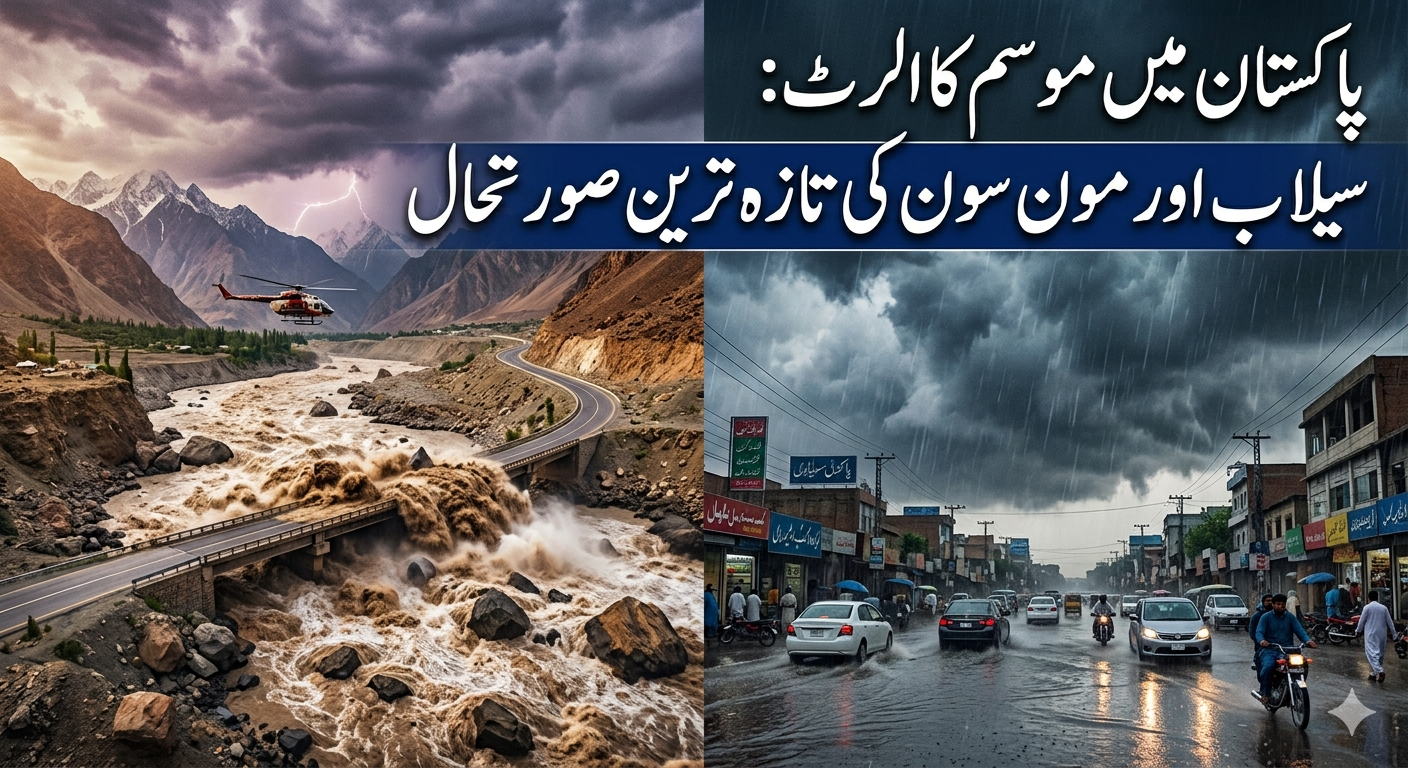
Pakistan Weather Alert Today
PMD issues critical GLOF alerts for GB & KP due to rising temperatures, plus nationwide urban flooding and monsoon warnings. A massive weather shift is underway across Pakistan today, bringing an intense mix of severe regional hazards. While the plain areas continue to bake under extreme heat and suffocating humidity, the Pakistan Meteorological Department (PMD) has issued critical, time-sensitive emergency alerts for the northern and upper regions of the country. A high-pressure system combined with soaring alpine temperatures has triggered urgent Glacial Lake Outburst Flood (GLOF) alerts for Gilgit-Baltistan and Khyber Pakhtunkhwa. Concurrently, a powerful westerly wave is advancing toward the country’s upper borders, signaling the official transition into the 2026 monsoon season.
Also read: The Ultimate All Network Internet Packages Comparison Guide
Current Regional Weather Breakdown Across Pakistan
The weather map today shows a stark division between the extreme, dry-to-humid heat dominating the southern plains and the volatile, rapidly shifting atmospheric conditions in the northern mountains.
Extreme Heat and Humidity in the Plains
In Punjab, Sindh, and Balochistan, conditions remain intensely hot and dry, with high humidity pushing real-feel temperatures into dangerous territory. Plains areas are experiencing heat spikes, with the PMD advising citizens to minimize direct sunlight exposure between 11:00 AM and 4:00 PM. High humidity levels, particularly in coastal areas like Karachi, are hovering between 70% and 75%, restricting natural cooling effects and increasing thermal discomfort.
Volatile Northern Conditions
Up north, the story is entirely different. While the valleys are experiencing significant warming, a westerly wave entering the upper regions is destabilizing the atmosphere. This is setting the stage for sudden, isolated dust storms, gusty winds, and evening thunderstorms.
Critical GLOF Alerts for Gilgit-Baltistan and Khyber Pakhtunkhwa
The National Disaster Management Authority (NDMA) and the PMD have placed northern Pakistan on high alert due to rapid, accelerating snow and ice melt.
Why the GLOF Risk is Critical Right Now
Temperatures in the high-altitude glaciated valleys of Gilgit-Baltistan (GB) and Khyber Pakhtunkhwa (KP) are tracking significantly above historical averages. This sustained heat is putting immense pressure on unstable glacial lakes, causing them to expand rapidly. When these natural ice dams fail, millions of gallons of water, debris, and mud rush down narrow valleys with catastrophic force.
Impacted Infrastructure and Travel Closures
The threat to lives and infrastructure has forced authorities to issue strict travel advisories.
- Karakoram Highway (KKH/N-35): Anticipated temporary closures due to rockfalls and debris flows.
- Jaglot-Skardu Road (JSR): High risk of sudden landslides blocking connecting pathways.
- Mountain Streams: Water levels are rising dangerously high; tourists and locals must avoid camping near riverbanks or slopes adjacent to active glaciers.
Monsoon 2026: Upcoming Nationwide Rainfall Timelines
The current oppressive humidity is the direct result of moisture-laden currents penetrating deep into Pakistan’s central and eastern regions. The Met Office confirms that this transition phase will culminate in widespread monsoon rain, windstorms, and thundershowers starting early this July.
Regional Rainfall Expectations
| Region | Expected Timeline | Potential Secondary Risks |
| Kashmir | July 1 – July 6 | Flash flooding in local streams and nullahs, severe landslides |
| Khyber Pakhtunkhwa (Dir, Swat, Peshawar) | July 1 – July 5 | Rockfalls, localized flash floods, communication network disruption |
| Upper & Central Punjab (Islamabad, Lahore) | July 1 – July 6 | Severe urban flooding, infrastructure damage to solar panels/billboards |
| Southern Punjab (Multan, Bahawalpur) | July 3 – July 5 | Intermittent heavy rain, intense dust storms, wind damage |
| Balochistan (Zhob, Barkhan, Sibbi) | July 1 – July 4 | Hill torrents in adjoining areas, flash floods in seasonal streams |
| Sindh (Sukkur, Larkana, Dadu) | July 3 – July 4 | Isolated heavy downpours, high winds, drainage system strain |
Urban Flooding and Infrastructure Risks in Major Cities
The incoming monsoon system is moving fast and packing high precipitable water levels. This poses an immediate threat to major urban centers where drainage infrastructure is easily overwhelmed.
What Cities Face Urban Flooding?
The PMD has explicitly warned of a high risk of localized urban and flash flooding from July 1 to July 4 in the following major cities:
- Islamabad and Rawalpindi
- Lahore, Gujranwala, and Faisalabad
- Sialkot, Narowal, and Peshawar
Protecting Property and Solar Setups
The windstorms preceding the heavy rains are projected to feature violent, damaging gusts. Homeowners—particularly those who have installed residential solar panel setups—must inspect their mounting structures immediately.
Expert Safety Warning: Ensure all outdoor billboards, loose roofing sheets, and solar arrays are mechanically secure. Strong winds can easily tear unanchored systems from rooftops, creating severe physical hazards and causing massive financial losses.
Agricultural and Travel Advisories for the Next 48 Hours
The current weather volatility requires proactive measures from two of the most vulnerable segments: farmers and travelers.
Guidelines for Farmers managing Kharif Crops
The combination of preceding heatwaves and sudden incoming storms creates a tricky management window for early-stage Kharif crops and seasonal vegetables.
- Irrigation Management: Do not apply heavy irrigation if strong windstorms are forecast in your district within the next 24 hours, as this can cause crop lodging (falling over).
- Drainage Planning: Ensure field drainage channels are clear in northern Punjab and KP to prevent waterlogging when the heavy downpours hit.
Strict Advisories for Mountain Tourists
If you have travel plans to Murree, Galliyat, Swat, Gilgit, or Hunza over the next few days, reassess your itinerary. Landslides, rockfalls, and debris flows can leave you stranded in remote valleys without electricity or communication networks for days. Avoid unnecessary travel through mountain passes until the atmospheric conditions stabilize.
Dynamic Weather Mitigation Dashboard
Adjust the parameters below to see how changes in temperature anomalies, humidity levels, and regional geography affect local weather risk assessments.
Actionable Safety Checklist for the Weather Transition
To minimize the impact of the impending weather shift, execute these quick safety checks today:
- [ ] Backup Power: Ensure power banks and emergency lights are fully charged ahead of expected power outages from windstorms.
- [ ] Clear Drains: Clear any debris from household gutters and neighborhood drainage paths to prevent local flooding.
- [ ] Secure Rooftops: Tie down or clear loose items on roofs, balconies, and terraces, including securing solar panel frameworks.
- [ ] Emergency Kits: Keep clean drinking water, essential medicines, and emergency contacts accessible, especially in areas prone to flash floods.
Frequently Asked Questions
What areas in Pakistan are under a GLOF alert today?
The GLOF (Glacial Lake Outburst Flood) alert is active for the glaciated valleys of Gilgit-Baltistan and Khyber Pakhtunkhwa. Soaring temperatures are rapidly melting snow and ice, creating a high risk of sudden lake bursts and flash floods in adjacent streams.
When will the 2026 monsoon rains officially start in Pakistan?
The PMD forecasts that nationwide monsoon rains will begin during the first week of July 2026. A westerly wave entering upper Pakistan on June 30 will initiate the transition, bringing widespread relief from the heat alongside intense thunderstorms.
Is it safe to travel via the Karakoram Highway right now?
No, travel is highly discouraged. The NDMA has warned of temporary closures on the Karakoram Highway (KKH) and the Jaglot-Skardu Road between June 27 and July 3 due to heightened risks of rockfalls, landslides, and debris flows.
How can urban flooding affect major cities like Lahore and Islamabad?
Heavy downpours over short durations can overwhelm old city drainage networks, leading to submerged roads, traffic gridlocks, and water entering low-lying residential areas. Residents in these cities should prepare for localized flooding between July 1 and July 4.
What should I do to protect my solar panels from upcoming windstorms?
Have a technician verify that your solar structural mounts are firmly bolted and wind-resistant. High wind speeds during pre-monsoon dust storms and thundershowers can damage loose panels or dislodge unanchored structures.
Conclusion
The transition from extreme summer heatwaves to active monsoon dynamics is a complex atmospheric process that introduces serious safety risks. Stay updated with real-time alerts from local authorities, avoid mountain travel over the next week, and secure your immediate surroundings against high winds and urban pooling.