
Solar Panel
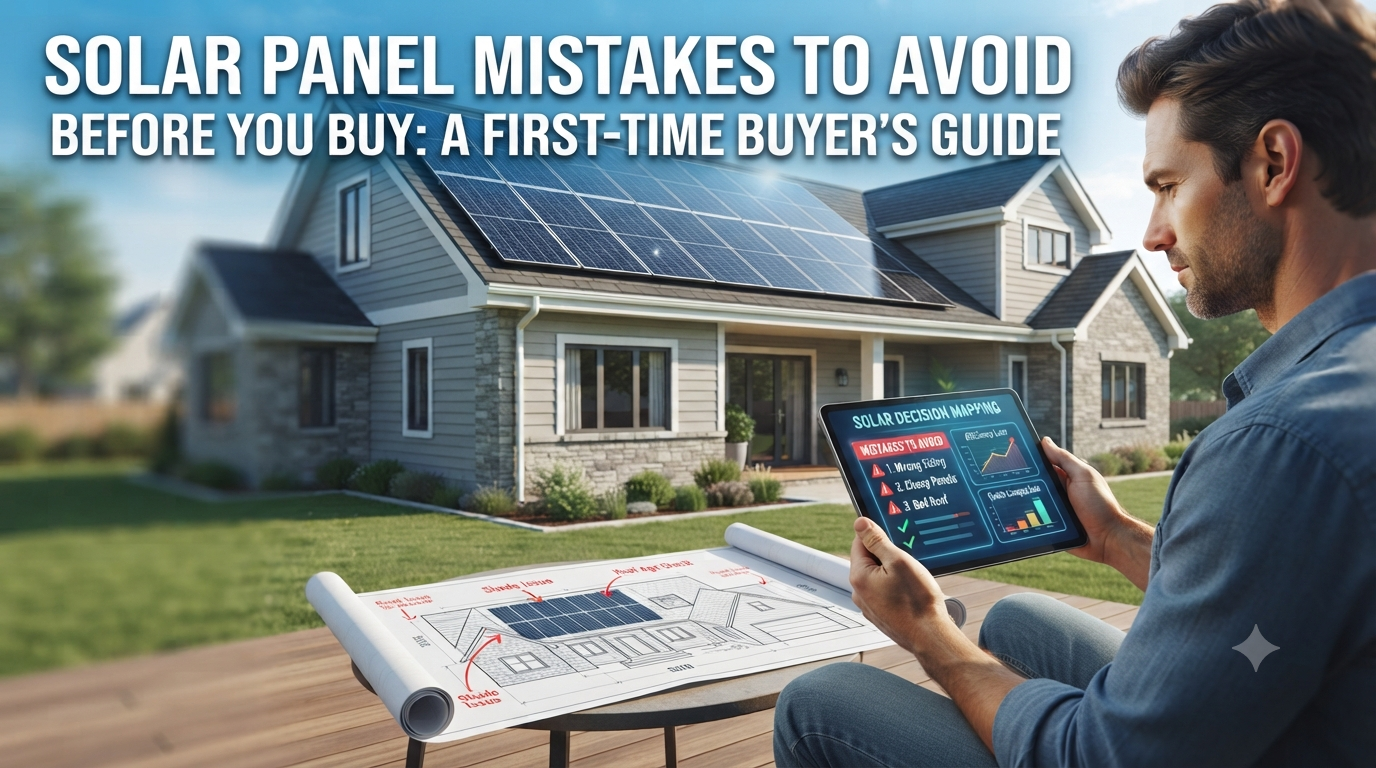
Avoid costly buyer’s remorse by learning the 5 critical mistakes to avoid before buying your first solar panel, from sizing errors to utility traps. Switching to solar energy feels incredible. There is a genuine thrill in watching your electricity meter spin backward and knowing you are generating your own clean power right from your rooftop. However, rushing into a residential solar installation without a solid strategy can turn that clean energy dream into an expensive, underperforming headache. Buying your first solar system is not like purchasing a household appliance; it is a long-term real estate investment that requires careful calculation. If you want to bypass the buyer’s remorse that catches so many homeowners off guard, here are five critical mistakes you need to avoid before signing any contracts.
Also read: اپنا چھت، اپنا گھر پروگرام 2026: پنجاب کے مستحق خاندانوں کے لیے سنہری موقع
1. Miscalculating Your Energy Needs and System Sizing
One of the most common pitfalls first-time buyers fall into is sizing their solar array based entirely on their current monthly electricity bill without factoring in future lifestyle changes.
When you design a system that only matches your exact historical consumption, you leave zero room for expansion.
Why Under-Sizing Your Solar Array Costs More Long-Term
If you buy an electric vehicle, add a central air conditioning unit, or grow your family a year from now, your energy consumption will spike.
Adding panels later is notoriously inefficient. Installers charge high mobilization fees for small add-on jobs, and finding matching hardware years down the line can be a logistical nightmare.
How Seasonal Variations Impact Your True Power Consumption
Energy usage rarely stays flat throughout the year. Winter heating or summer cooling can drastically shift your daily kilowatt-hour consumption.
A smart system design evaluates a full 12-month utility history rather than a single seasonal snapshot. This ensures your production estimates hold steady even during gloomy winter months.
Future-Proofing Your Home Energy Requirements
To calculate your ideal system size, take your annual kilowatt-hour usage and divide it by the local peak sun hours in your region.
Always pad that final number by 10 to 15 percent to account for module degradation, shade accumulation, and future energy demands.
2. Choosing the Lowest Bidder Without Evaluating Equipment Quality
It is completely natural to gravitate toward the lowest price tag, especially when solar installation quotes vary by thousands of dollars across different local contractors.
However, in the solar industry, a bargain basement price almost always translates to compromised hardware, substandard wiring, or ghost-town customer service.
Understanding Tier-1 Solar Panels vs. Budget Alternatives
Tier-1 manufacturers are designated by BloombergNEF based on their bankability, financial stability, and manufacturing longevity.
Budget panels from unknown white-label brands might save you upfront cash, but they often feature higher annual degradation rates. While a quality panel loses less than 0.5 percent of its generating capacity per year, cheap alternatives can degrade twice as fast, effectively cutting your system’s lifespan in half.
The Hidden Costs of Cheap Inverters and Racking Hardware
Your solar panels get all the glory, but the inverter is the beating heart of your entire system. Choosing a low-quality string inverter or cheap roof-mounting hardware invites catastrophic failure.
Substandard racking can compromise your roof’s waterproofing, leading to leaks that void both your roof warranty and your installer’s workmanship guarantee.
3. Ignoring Roof Condition, Angle, and Shading Realities
Slapping expensive solar panels onto an aging, compromised roof is one of the most costly blunders a homeowner can make.
If your roof has less than 10 years of life left, you are inviting a massive financial headache.
Why You Must Inspect and Replace Your Roof Before Installation
Taking off solar panels to perform a roof replacement midway through their lifespan easily adds $2,000 to $4,000 in de-installation and re-installation labor.
Always complete a thorough roof inspection before getting solar quotes. If your shingles are curling, brittle, or nearing the end of their functional cycle, replace the roof first.
How Azimuth Angle and Pitch Dictate Energy Yield
The direction your roof faces—known as the azimuth angle—dramatically dictates your daily energy harvest.
- South-Facing Roofs: Deliver optimal, all-day power generation in the Northern Hemisphere.
- East and West-Facing Roofs: Produce great morning or afternoon energy peaks, though roughly 15 to 20 percent less total annual yield than a pure southern exposure.
- North-Facing Roofs: Generally inefficient and rarely recommended for primary solar arrays.
Mitigating Micro-Shading Issues With Optimizer Technology
Even a tiny shadow from a nearby chimney, utility pole, or tall tree branch can severely choke a traditional solar string system.
If partial shading is unavoidable on your property, insist on microinverters or DC optimizers. These devices ensure that a shaded panel does not drag down the performance of the entire connected string.
4. Failing to Research Local Utility Policies and Net Metering Rules
Your solar financial payback period relies heavily on how your local utility company credits you for excess energy fed back into the grid.
Ignoring regional net metering policies can completely shatter your expected return on investment.
What Is Net Metering and Why Is It Changing?
Net metering is a billing mechanism that credits you for the surplus electricity your panels generate and send back to the utility grid.
Many regional utilities are actively transitioning away from one-to-one retail rate net metering toward net billing structures. Under these newer models, the utility buys your excess power back at a much lower wholesale rate, which extends your overall financial payback timeline.
Navigating Interconnection Approvals and Grid Limits
Before a single panel is mounted, your installer must secure an interconnection agreement from your utility provider.
Some local grids have hosting capacity limits in specific neighborhoods. Failing to verify these rules beforehand can leave you with a fully installed system that the utility legally refuses to connect to the grid.
5. Skipping Multiple Quotes and Overlooking Warranty Fine Print
Treating the first door-to-door solar salesperson or online quote as your final authority is a recipe for overpaying.
The residential solar market is filled with wide pricing spreads and wildly varying contract terms.
Why You Should Always Compare at Least Three Detailed Proposals
Getting multiple quotes lets you compare equipment tiers, system warranties, and financing costs side-by-side.
A reputable installer will provide a complete shading analysis, a detailed production model, and transparent line-item pricing without resorting to high-pressure sales tactics.
Deconstructing the Three Essential Solar Warranties
A comprehensive solar protection plan relies on three distinct warranties that you must verify in writing:
- Product/Equipment Warranty: Covers physical defects in the panels and racking, typically lasting 10 to 25 years.
- Performance Warranty: Guarantees that your panels will produce a specific percentage of their rated power (usually 80 to 85 percent) after 25 years.
- Workmanship/Installation Warranty: Covers the installer’s labor and roof penetration integrity, ideally backed for 10 years or more.
Frequently Asked Questions
What happens to my solar panels on a cloudy day or during a storm?
Solar panels still generate electricity on cloudy days, though their output drops to roughly 10 to 25 percent of their rated capacity depending on cloud density. During severe storms, standard grid-tied systems automatically shut down for safety reasons to prevent backfeeding power into downed utility lines.
How long does the entire solar installation process take from start to finish?
The physical roof installation usually takes only 1 to 3 days. However, the entire process—from initial site survey and engineering design to permitting, utility interconnection approval, and final inspection—typically spans 4 to 8 weeks.
Do solar panels completely eliminate my monthly electricity bill?
Unless you install an off-grid system with robust battery storage, you will likely still receive a monthly utility bill. Most grid-tied homeowners pay a small baseline connection fee to stay hooked up to the grid, even if their net energy consumption drops to zero.
Is it better to buy solar panels with cash or use a solar loan?
Paying with cash yields the fastest return on investment and maximizes your lifetime savings because you avoid loan origination fees and interest. However, low-interest solar loans still allow you to lock in predictable monthly energy costs that are often lower than your traditional utility bill.
Do solar panels increase my property value?
Yes. Numerous real estate studies show that homes equipped with owned solar panels sell faster and command a 4 percent premium on average compared to non-solar homes in the same neighborhood.
What maintenance do solar panels require to stay efficient?
Solar panels require very little maintenance because they have no moving parts. In most climates, natural rainfall washes away dust and pollen. If you live in an arid region or near agricultural fields, a simple rinse with a garden hose once or twice a year is usually all that is needed.